-4.png?width=800&height=800&name=LInkedIn%20Business%20Page%20Profile%20Picture%20Savvy%20Marketing%20Works%20(1)-4.png)
marketing strategy

If you’re already locked in for 2026, congratulations! If not… let’s get you on your way.
After spending seven seasons working on strategic planning with other executives and building a plan for marketing to achieve business goals, I have some insights to share. Whether your planning process involves a fancy “retreat” getaway or the same old execs arguing it out in the conference room, we’ve got you covered.
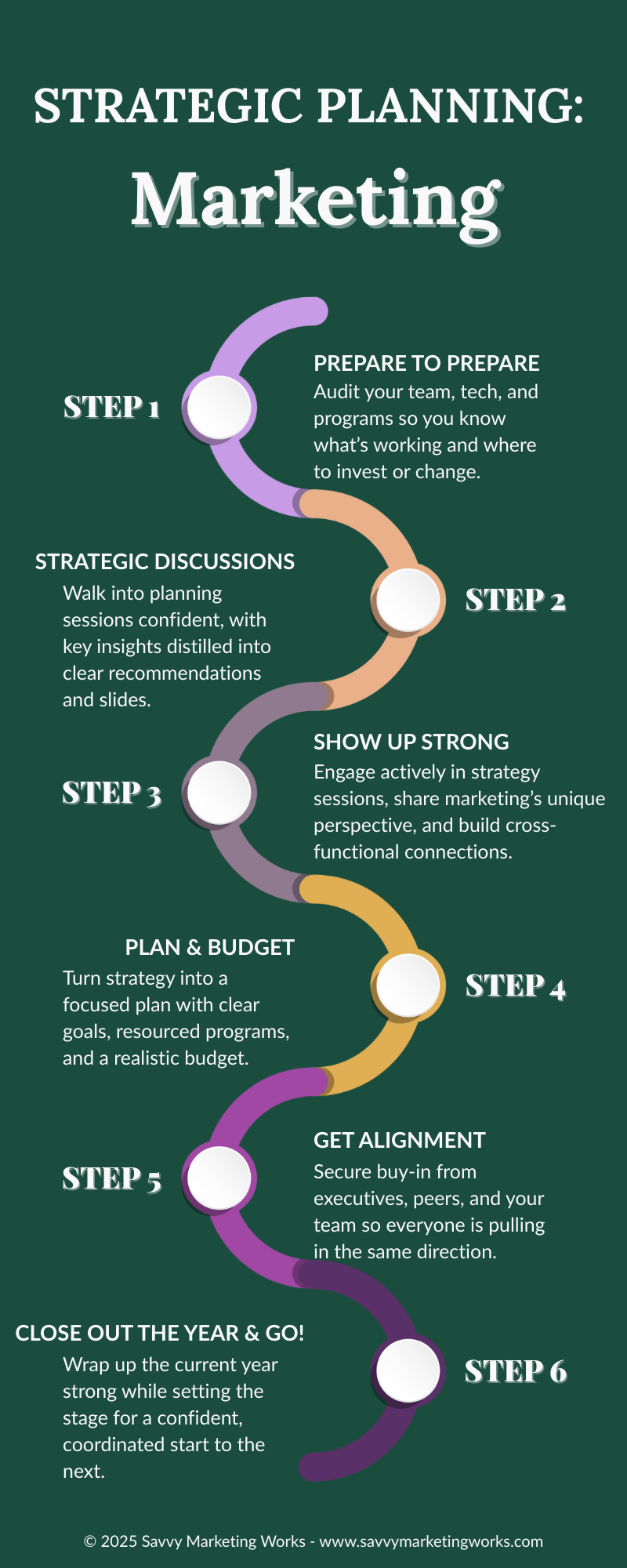
Step 1: Prepare to Prepare
Team: Meet 1:1 with everyone if you can. If not, do small groups or a brief survey/poll. Capture input on what’s working well and where the pain points are. It’s also valuable if you can meet with cross-functional team members and identify the same things, only from their perspective.
Takeaways: headcount considerations, discussions you may need to have with other leaders, internal priorities
Tech: Audit your tech stack. You may have too many tools or you may be using manual processes where you could automate.
Takeaways: focus areas, budget needs
Programs: Review metrics. Did you hit revenue targets and other objectives? What is clearly performing well? What do you not have insights into… is it possible it’s helping and you should keep it? Or was it a flop and it needs to go?
Takeaways: budget needs, effort vs. return
What’s happening in marketing: Take what you learned in Step 1 and distill it down so you can speak about it as needed. Be prepared to present from the perspective of achieving company goals (revenue, growth), not just stats marketing cares about (open rates, visitors).
Deliverables: your key info in one or two slides
Where the organization is heading: Marketers have a great viewpoint because they often see a broader picture than other departments. Take a look at what’s going on so you’re prepared to make recommendations around expansion or where to pull back, product mix, or something else.
Deliverables: a few bulleted recommendations (with data available to back it up); tentative needs/budget to execute
Alignment with colleagues: Don’t go into the strategy sessions blind. What is everyone else thinking about? How can you prepare together in advance?
Deliverables: prep meetings and notes from the outcomes
Marketing brings a unique perspective. We see what everyone else is working on, in most cases, since we’re helping push it out the door and amplify it. It is generally encouraged to speak up about other functions beyond your own.
Connect with your colleagues. There isn’t often a lot of time together these days, especially if you’re usually remote. A few minutes catching up or solving a problem can go a long way.
Take notes back to your team as applicable. The more up to date you can keep them, the better they can help you with the rush of planning.
Create the plan. What’s your strategy for the coming year? How will marketing support the business objectives that have been defined? These might be revenue (by product or vertical), launches, growth in targeted areas, etc. What do you need to deliver in order to achieve what’s been agreed on? How can you build in time for last-minute opportunities or emergencies?
Build the budget. Whether you’re zero-based or using the current year as a starting point, you’ll need to figure out what you need to spend. It can be helpful to divide the categories into people (salaries, contractors), tech (software, tools, subscriptions), and programs (advertising, events). Build in an opportunity/emergency cushion.
Align with leaders. Help your colleagues understand how the plan helps achieve their goals. Make sure nothing’s changed that you might need to adapt to.
Get executive buy-in. Use your data and market info to get alignment on the plan and spend.
Share with and enable your team. The sooner they know the strategy, the more comfortable they’ll feel building out the plan to get there. I always take them along through the other parts of the process as well. After all, it helps them see what’s happening and learn to take on bigger roles one day.